The route does not connect.
A difficult corner or a disconnected path can determine how the whole garden is used. Read access and the everyday journey together.
Connect the layout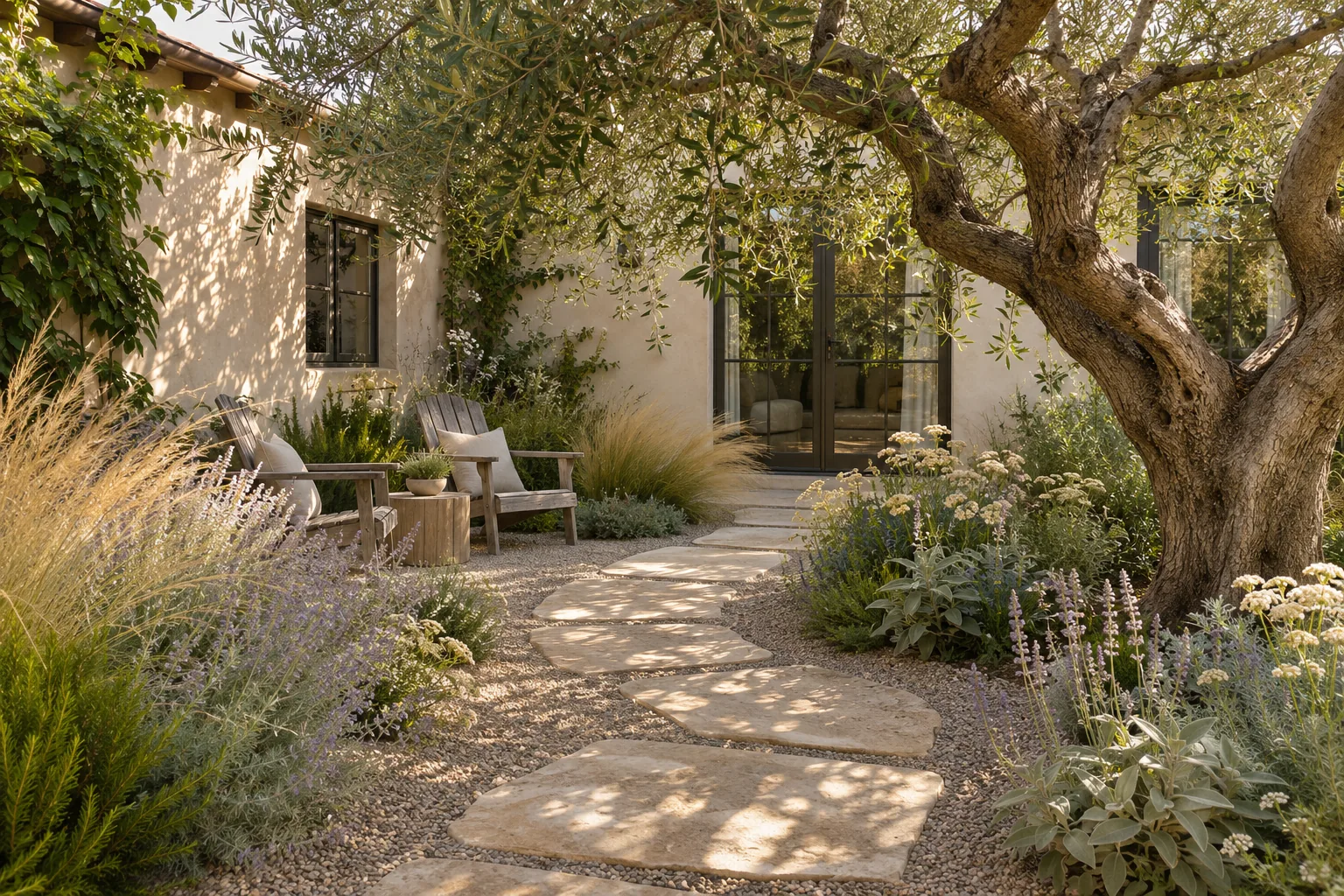
The route you take.
The place you pause.
The room you leave to grow.
01 / NOTICE THE ROUTEA simple way through changes the whole place.
02 / FIND A PURPOSEMake room for the hours you want to spend here.
03 / CONNECT THE PARTSPlanting and everyday life, considered together.
A difficult corner or a disconnected path can determine how the whole garden is used. Read access and the everyday journey together.
Connect the layoutA view needs somewhere to sit, gather or pause. Give the life you want outside a place in the plan.
Plan a gathering placeLight, texture, spacing and realistic care work together. Make the border a living part of the layout.
Give planting a directionSeparate what matters first from what can develop over time. An agreed brief makes the first decision easier.
Clarify the first step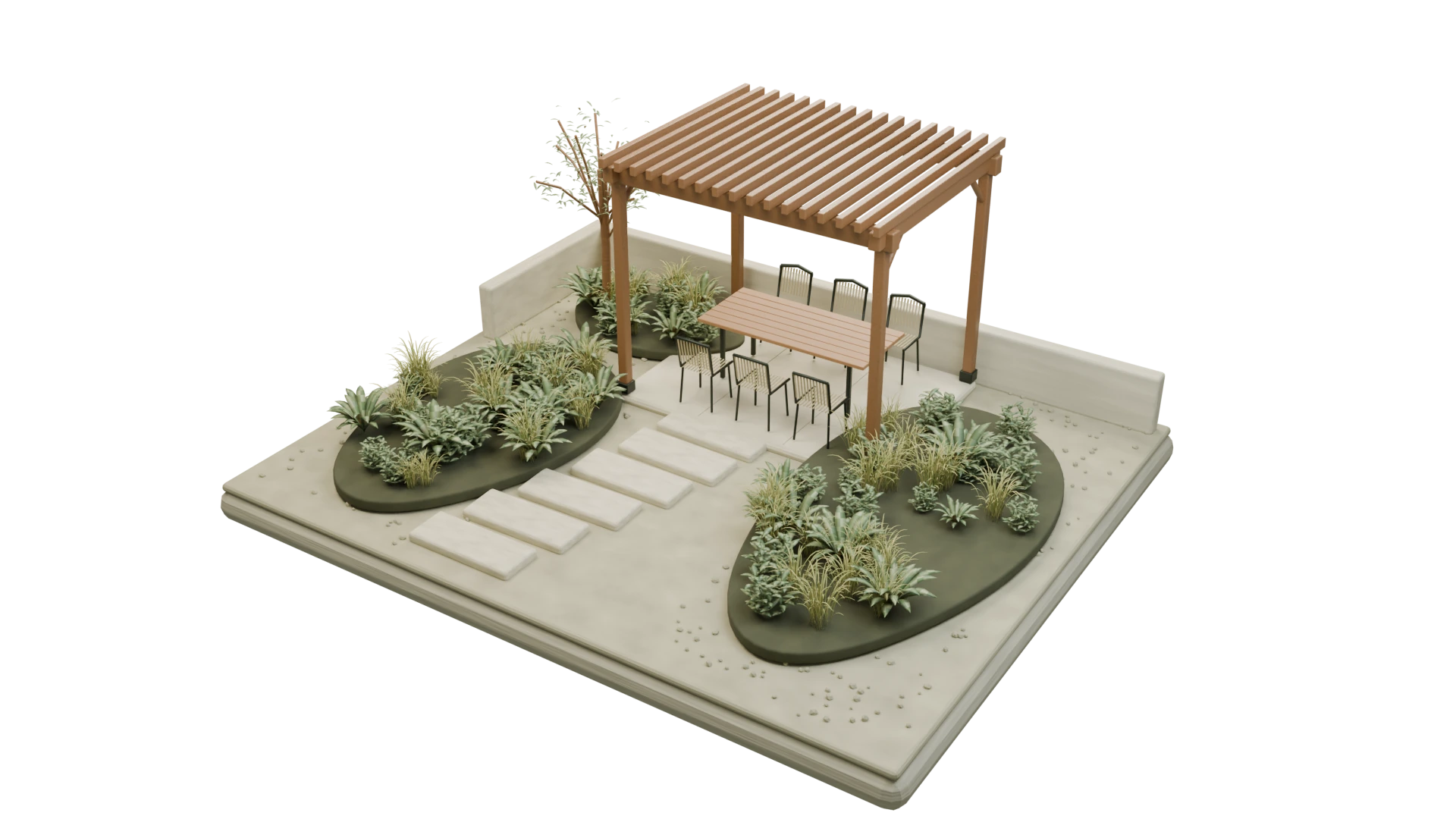
Explore the connected idea below.
A route, a table, shelter and living edges. Read them together before making a decision about any single part.
An original architectural study. It illustrates a way of thinking; a plan for your own garden follows the site and an agreed brief.
Seven limestone steps connect the entrance to the gathering terrace. Their purpose is to make the everyday journey clear.
Actual access, levels, drainage and construction need to be checked on site. This concept is a conversation about the route, not a construction drawing.
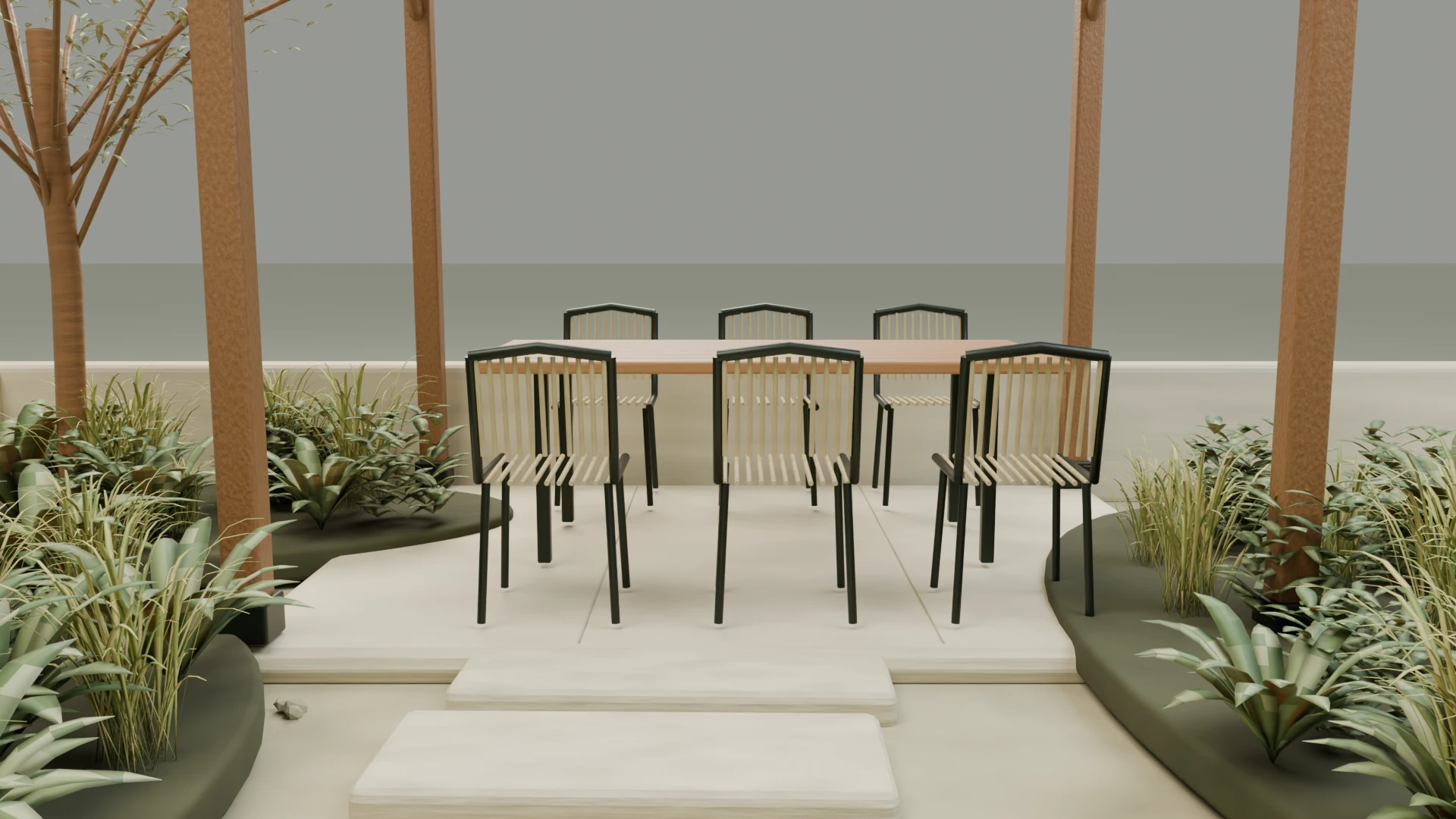
The oak table and six chairs belong to one assembly. Look at the room around the chairs as well as the furniture itself.
Think about who will use the place, when they will be here, and how people will move around a gathering in progress.
Four posts support the open oak pergola. Spaced slats frame the sky and give the gathering place a legible edge.
The structure shown here is conceptual. Engineering, permits, building documentation and construction are separate from landscape concept design.
Three planted beds soften the route and the terrace. Silver foliage, fine grasses and an olive canopy bring different scales of texture.
A final plant palette follows the real light, soil, climate and care available. Plant supply, soil work, irrigation and installation are separate.
The same stones, table, pergola and planted edges come back together. Move from the overview into the place they create.
The eye-level view is rendered from this exact original courtyard model. It is not a photograph of a completed client garden.
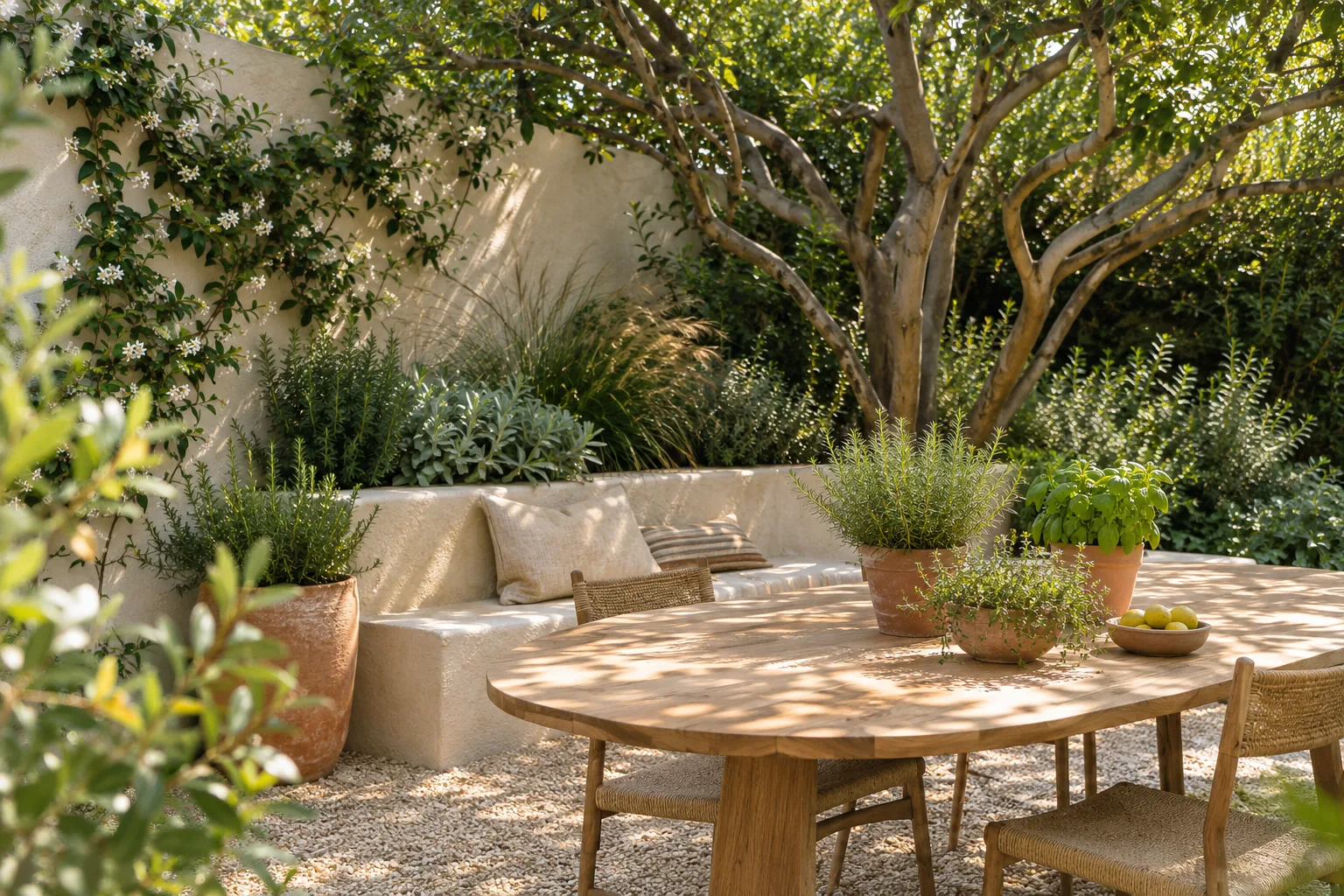
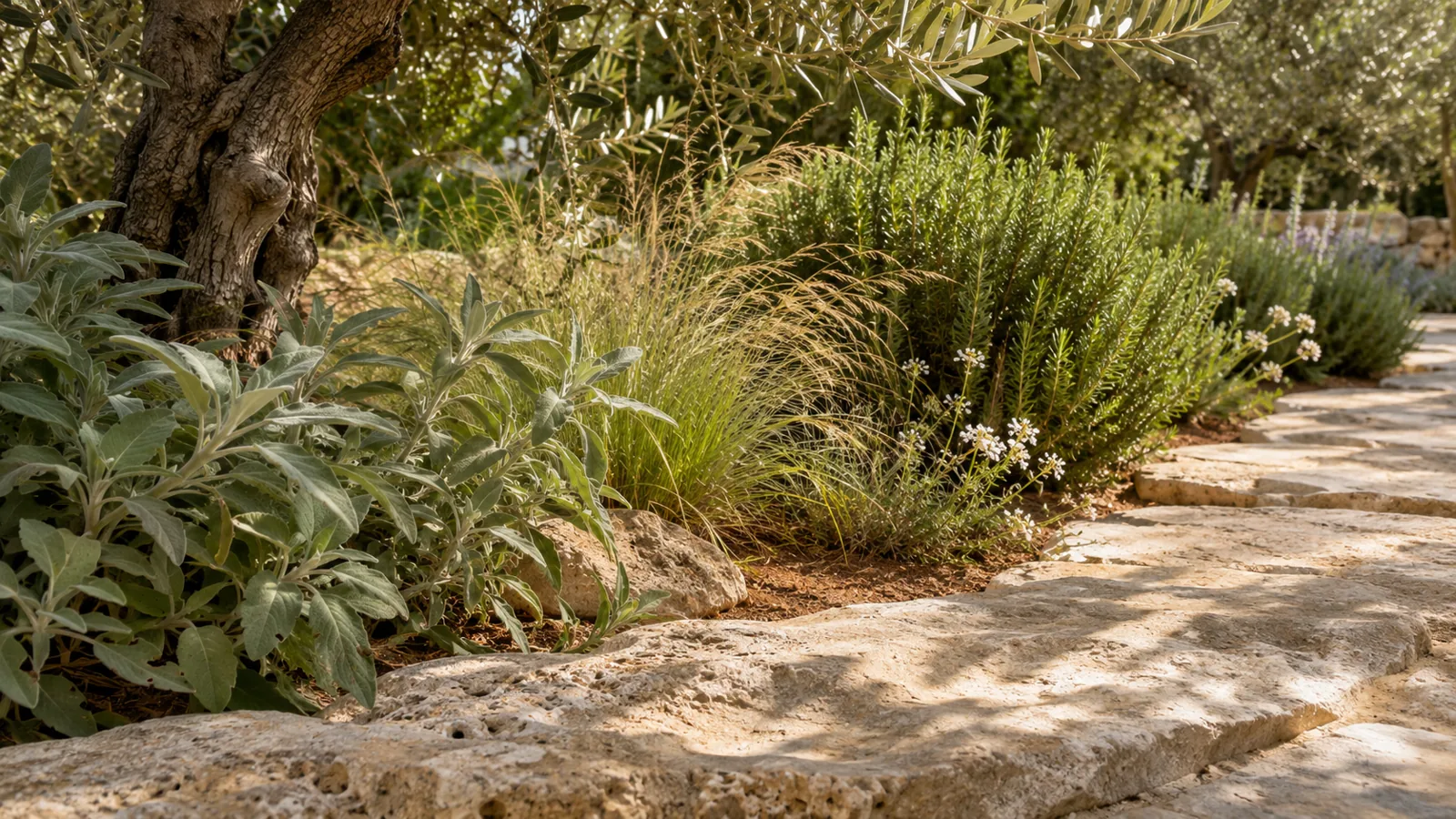
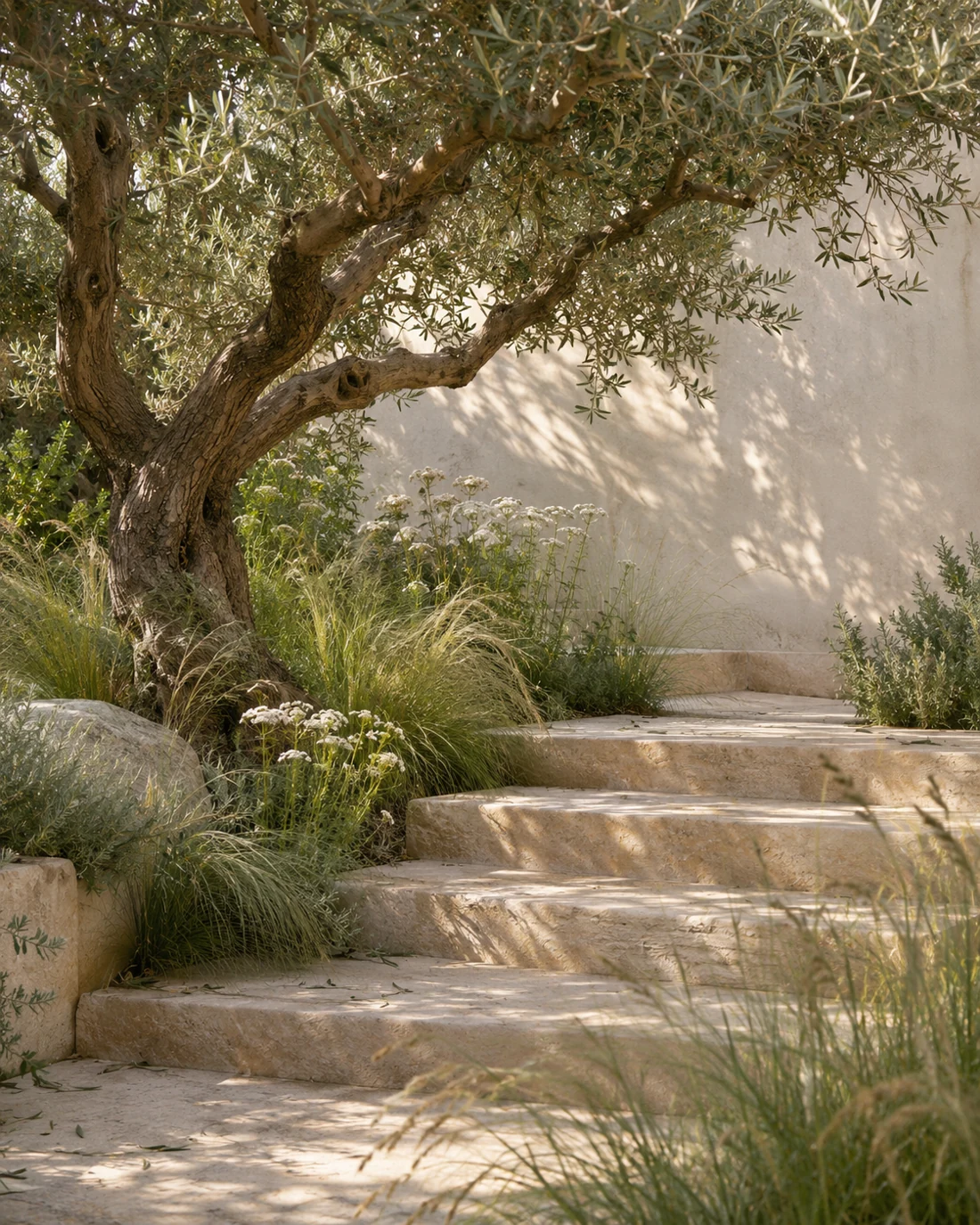
Photograph the garden in the morning and later in the day. Record when you would actually like to use each part.
Useful before choosing a gathering place or a planting direction.Keep a short record of existing plants, damp or dry patches and the routes you use. A photograph can start the conversation.
Plant health, soil and site conditions need a closer, site-specific review.Think about the time and help available for routine watering, seasonal pruning and establishment care.
An agreed task list is more useful than a promise of a maintenance-free garden.Every service begins with an agreed area, a clear brief and the work you want to take forward.
For a new idea, a difficult corner or a garden that needs a clearer direction.
For an established garden that needs a practical plan for the coming season.
For a border, courtyard or existing space where the planting needs to work as one composition.
For a space where circulation, gathering places and planting need to be considered together.
Notice one thing. Choose what matters first. Take a clear starting point into the conversation.
What needs to work first? Find a useful starting point without having to decide everything at once.
Start with your priorities, the place you have and the change you would most like to make.
Begin with this conversation 02 / YOUR STARTING POINTConsider the route, places to gather and planting zones as one concept.
Begin with this conversation 03 / YOUR STARTING POINTConnect texture, spacing and establishment care around an agreed planting area.
Begin with this conversation 04 / YOUR STARTING POINTRead the planting, watering patterns and routine care. Agree practical priorities for the coming season.
Begin with this conversationYou don’t need a finished brief before the first conversation.
A few photographs and approximate dimensions. Include the door, access and the corners you find difficult.
Who uses the space, when they use it, and the one change that would make the most difference.
What matters first, what can wait and the level of ongoing care that feels realistic.
A garden consultation can help establish the priorities. A planting plan can follow for an agreed border or area; the scope is discussed around your actual space.
Landscape design covers the agreed concept layout, material direction and priorities. Surveying, engineering, permits, construction documents and building work are separate.
Your inquiry saves your details and chosen starting point for review. It does not reserve a consultation time or confirm email delivery.
A little about the place you have.
One thing you’d love to change.